Zero-Bloat Microservices: The Reverse-Tunnel API Gateway & Self-Registering Worker Pattern

A production microservices stack has a gravity problem. Everything in it pulls at you to add one more system: a service mesh for traffic policy, a discovery cluster for location, a config service for knobs, a flag service for rollouts. Each one justifies itself in isolation—and each one is a deploy target, a failure mode, and a pane of glass you’re now on-call for at 3am. We wanted the capability of that stack—routing, registry, health, runtime extensibility—without taking on the tenants. What we ended up with is smaller than the idea sounds: one stateless API gateway, workers that dial out, and Protobuf schemas that are files, not deploys. ...
October 23, 2026

NUTS on a Multi-Modal GARCH Posterior: Basins, Curvature Caps, and What the Chains Found

Fitting GARCH(1,1) models via NUTS on a 1,004-day market returns window isn’t just about crunching likelihoods—it’s navigating a brutal, multi-modal posterior landscape where standard samplers get permanently trapped. This is the third part of the volatility modeling series—the machinery behind everything here is part 1 and part 2. Here is what it found on long windows. When modeling extensive return histories, the posterior features a wide, high plateau alongside a lower mode tucked away at the $\omega \to 0$ corner of the persistence ridge, separated by a steep 12-nat drop. A standard MLE seed only finds a local shoulder, and naive samplers explore at best one corner. The lower mode’s peak sits $e^{-12} \approx 1.6 \times 10^{-6}$ times the plateau’s density—on the full history it contributes a sliver of the posterior mass. But the gap scales with how much data sits on the ridge (the window-size study below varies exactly that), and the two modes carry different $(\omega, \alpha+\beta)$ estimates: what a downstream model reads depends on which basin the chains landed in, and on long histories that must be found deliberately, not left to luck. ...

October 23, 2026
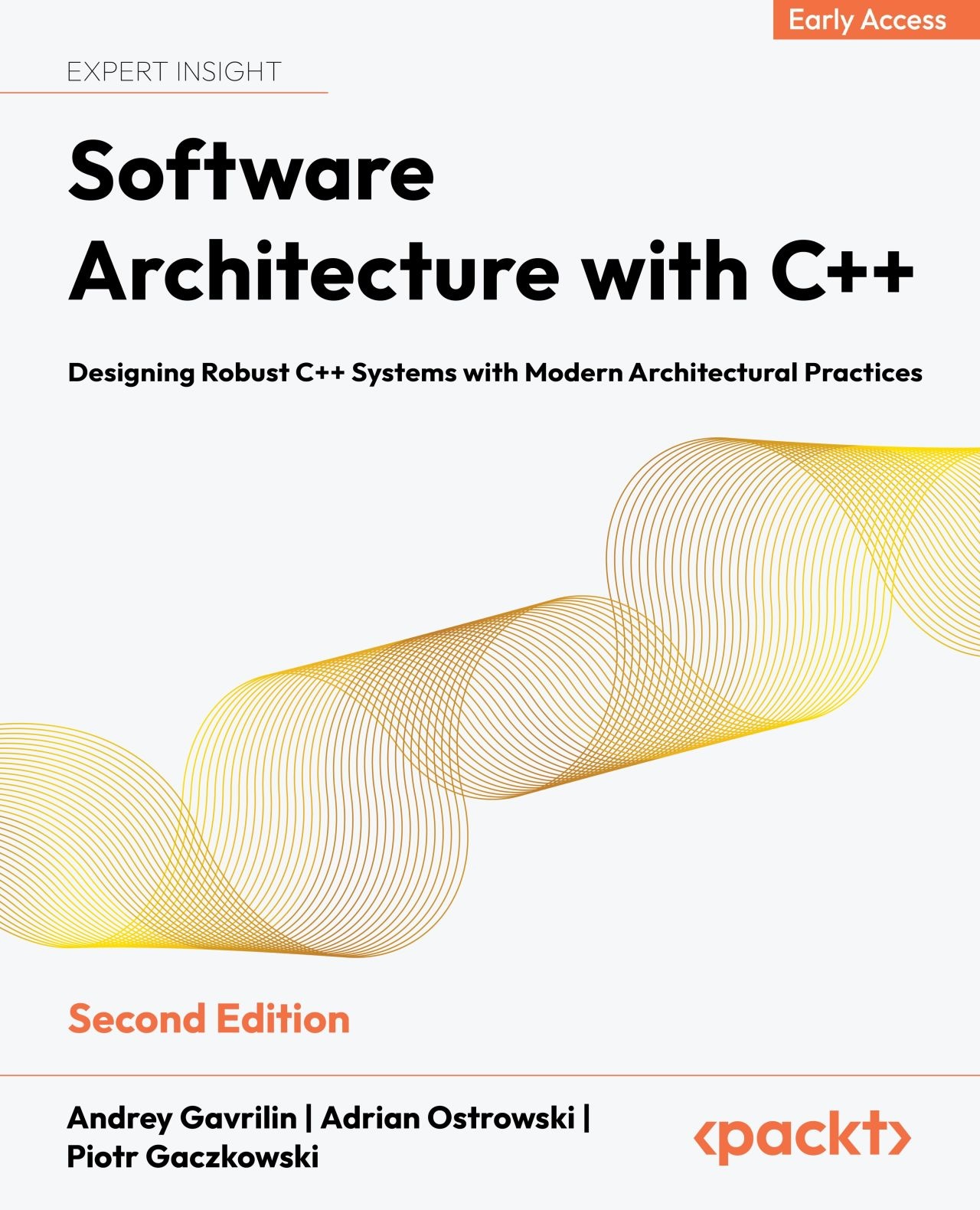
Software Architecture with C++ book cover

Book Review: Software Architecture with C++ — Bridging Theory and Production Reality

Book Review: Software Architecture with C++ — Bridging Theory and Production Reality By Razvan Coca | Senior C++/Linux Engineer I recently finished Software Architecture with C++ by Andrey Gavrilin, Adrian Ostrowski, and Piotr Gaczkowski. This book is not just a review; it’s an architectural compendium—a comprehensive handbook for any developer or architect serious about moving beyond “it compiles” to building truly robust, scalable enterprise systems. In an era of rapid deployment and complex distributed services, the difference between a functional prototype and production-grade software is architecture. This book successfully bridges that gap, grounding abstract concepts like SOLID principles and Microservices in pragmatic C++ code. ...

December 17, 2025
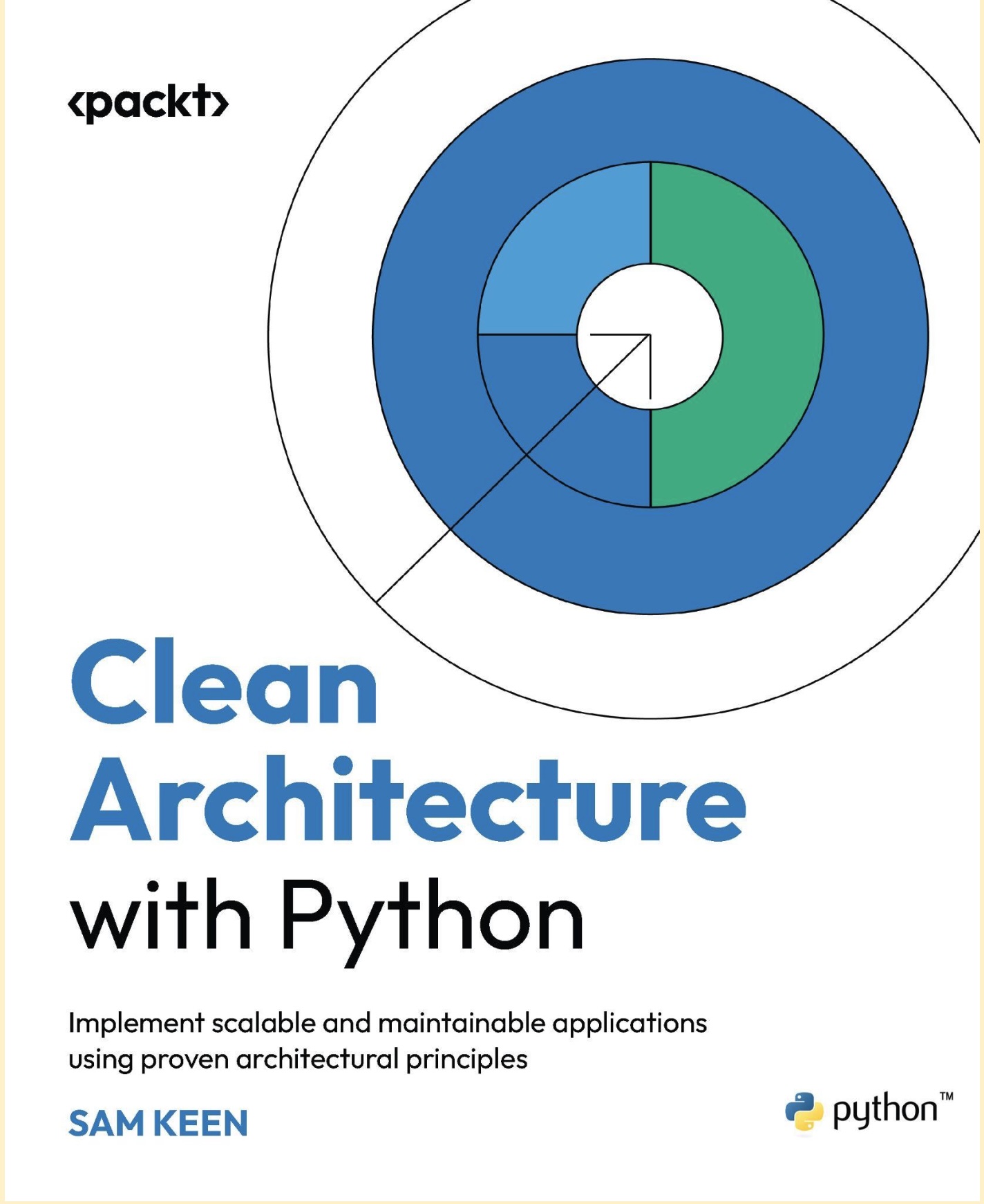
Clean Architecture with Python book cover

Book Review: Clean Architecture with Python — Modular Design in a 'Batteries Included' World

Book Review: Clean Architecture with Python — Modular Design in a ‘Batteries Included’ World By Razvan Coca | Senior Engineer I recently read Clean Architecture with Python by Sam Keen. For many Python developers, the language’s “batteries included” philosophy is a double-edged sword: while it allows for rapid prototyping and rich functionality, it often lures developers into dragging in heavy dependencies that render the software brittle and tightly coupled. Sam Keen’s book provides the necessary antidote. It brilliantly adapts Uncle Bob’s Clean Architecture principles specifically for the Python ecosystem, pairing them with SOLID principles to ensure that software remains modular, testable, and adaptable to changing requirements. ...

October 11, 2025